Healthy Aging · Practical guide
Strength Training After 40: A Practical Place to Start
Strength work is not just about lifting heavy weights. It can be a manageable way to keep the movements of daily life within reach, whether you are starting fresh or returning after a break.
Strength is about what you can do in daily life, not a number on a scale.
A clear path through the topic
What You’ll Learn
The pattern
Understand the everyday situation and the factors that may shape it.
Practical steps
Review realistic habits and questions you can use without an all-or-nothing plan.
A weekly plan
Choose manageable movements, make room for recovery and know when to seek guidance.
In This Guide
A familiar moment
Does this sound familiar?
- Carrying groceries or getting up from a low chair feels less easy than before.
- A long gym program does not fit your week.
- You want to begin without doing too much too soon.
If so, take a breath—the useful next step is observation, not a perfect overhaul.
Which movements are a safe, manageable starting point for strength training after 40?
Why strength matters beyond the gym
Getting up from a chair, carrying groceries and climbing stairs all ask muscles to produce force. Resistance training gives those muscles a reason to keep practicing. It can support strength and everyday function as people age, without requiring a bodybuilding goal or a particular body shape.
Muscle and activity are also part of the wider picture of energy use, but exercise is not a switch that guarantees weight loss or a faster metabolism. Muscle belongs alongside sleep, meals and ordinary daily movement in a wider wellness routine. The practical benefit of strength work stands on its own, even if body weight does not change.
If you have been inactive, begin with movements you can control. Consistency and a comfortable range of motion matter more than how much weight someone else can lift.
- Think of strength as the ability to do useful things, not as a number on a scale.
- Weights, resistance bands, machines and body weight can all provide resistance.
- A gradual starting point leaves room to learn technique and recover.
Build a simple beginner session
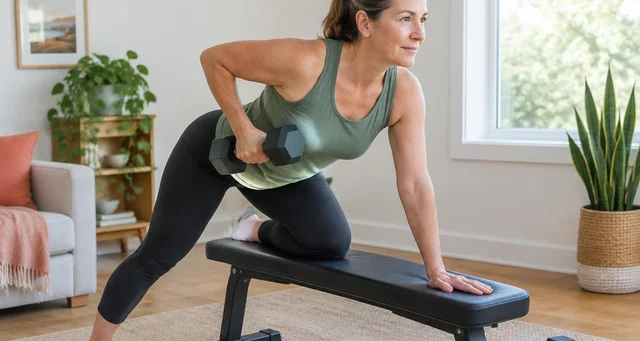
Start with a few movement patterns rather than a long list of exercises. A sit-to-stand from a sturdy chair practices standing up; a wall or counter push-up practices pushing; a supported row with a band or light weight practices pulling. A comfortable step-up or hip hinge can round out the session if those movements feel appropriate for you.
Choose resistance that allows controlled movement and breathing. You should be able to stop while your form is still steady. Try one set of several repetitions of each movement to learn it, then add more only as it becomes comfortable. There is no universal starting weight or repetition count that fits every adult.
Give yourself time between sessions that challenge the same muscles. Walking and other moderate movement can still fit on other days. Sleep and meals are also part of a wider routine.
- Use a stable chair or support when balance is uncertain.
- Move through a comfortable range; do not force painful positions.
- Exhale during the effort instead of holding your breath.
Make progress without chasing exhaustion
When a movement feels more controlled over multiple sessions, you can change just one thing: add a repetition, a set, a little resistance or a slightly harder variation. Keep the other parts of the routine familiar so that you can notice how your body responds.
Some muscle soreness after a new activity can happen, but severe pain or persistent loss of function is not a badge of progress. Rest, food and sleep all support the ability to return to activity. Strength, movement and recovery belong together rather than competing for attention.
A brief record of what you practiced and how it felt can help you notice progress in confidence and capability. Compare your own sessions, not someone else's highlight reel.
Fit it into a real week
A realistic plan can reserve two nonconsecutive days for strength activity and leave flexibility when life gets busy. US physical activity guidance recommends muscle-strengthening activities involving major muscle groups on two or more days each week. This is a general target, not a requirement to start at full intensity on day one.
If a full session is difficult to schedule, practice a short set of movements after a regular cue, such as finishing work or taking an afternoon break. Keep equipment accessible and use a smaller backup session when needed. The best routine is one you can return to after a missed day.
Resistance training does not replace walking, aerobic activity or balance practice. Different kinds of movement support different aspects of health and can be combined in ways that suit your interests and ability.
Know when to ask for guidance
If you have a recent injury, significant joint pain, a heart or other medical condition, dizziness, or uncertainty about what is safe, ask a healthcare professional before changing your activity. A qualified exercise professional can help adapt movements and check technique; neither this article nor a video can assess your individual situation.
Stop an activity that causes chest pain, faintness or unusual breathlessness and seek appropriate medical advice. Strength work should be a sustainable part of living well, not a test of how much discomfort you can tolerate.
For public guidance on weekly activity and strength work, consult the CDC Physical Activity Basics resource linked in Further Reading. Use it alongside professional advice when your needs are individual or complex.
For more context, read how muscle and movement fit into life after 40, build on this plan with daily activity and recovery habits, or explore strength, meals and sleep in a broader metabolism routine.
A low-pressure next step
What to notice next
- Choose two or three controlled movements that match your ability.
- Leave time between challenging sessions to recover.
- Ask a professional about pain, injuries or health concerns.
Frequently Asked Questions
Is it too late to start strength training after 40?
No. Adults can begin at different ages and experience levels. Start with manageable movements and seek individual advice when health or mobility concerns affect what you can do safely.
Do I need a gym or heavy weights?
No. Body-weight movements, resistance bands, household-safe equipment and gym machines are different ways to practice resistance. Pick an option that lets you move with control.
How often should beginners train?
US guidance recommends muscle-strengthening activity on at least two days each week. Beginners can work toward that gradually, allowing recovery and adapting to their starting ability.
Will strength training speed up my metabolism or guarantee weight loss?
No specific weight or metabolic result is guaranteed. Strength training can support muscle and function; sleep, food, daily activity and individual health also shape the wider picture.
What if an exercise hurts?
Do not push through sharp or persistent pain. Stop, adjust or choose another movement, and seek professional guidance if pain persists or you have an injury.
Start where you are
Choose two or three movements you can do comfortably, practice them with control and allow time to recover. A sustainable strength habit is a way to support what your body can do in ordinary life, not a promise about how it will look.
Further reading
Public-health resources for additional context. These links do not imply an endorsement of any product discussed here.