Healthy Habits · Practical guide
Healthy Daily Habits That Support An Active Lifestyle
An active lifestyle is built between workouts. The routines surrounding sleep, meals, movement, hydration and recovery make healthy choices easier to repeat.
The most useful metabolism habit may happen between workouts.

A familiar moment
Does this sound familiar?
- A busy day pushes movement to the bottom of the list.
- Meal plans work until the week becomes unpredictable.
- One missed day starts to feel like a lost week.
If so, take a breath—the useful next step is observation, not a perfect overhaul.
Which small anchors can make a healthy day easier to repeat?
This guide gives you the context first, then practical ways to notice what may be shaping your routine. No scavenger hunt required: the useful answer belongs in the article, not behind the next click.
Start with a rhythm, not a perfect schedule
A useful routine gives the day a few dependable anchors while leaving room for real life. A regular wake window, the first meal, a movement break and a wind-down cue can create structure without planning every minute. Anchors reduce decision fatigue because the next helpful action is already familiar.
Morning light and a consistent sleep-wake pattern help reinforce the body's daily rhythm. People with changing shifts or caregiving duties may not be able to follow a conventional schedule, but they can still use repeatable cues: light after waking, meals at roughly predictable intervals and a short transition before sleep.
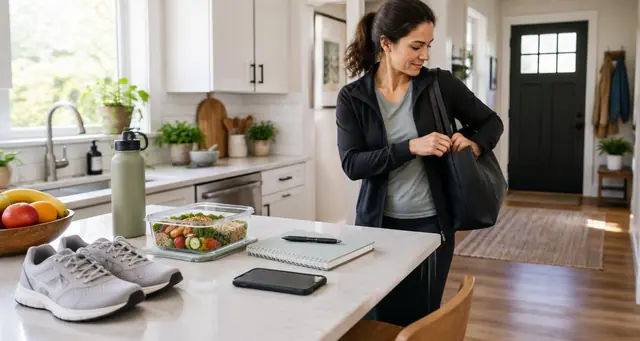
Begin with the part of the day you can influence. If mornings are rushed, prepare water, shoes or breakfast ingredients the night before. If evenings are unpredictable, schedule a brief walk earlier. A flexible routine survives disruption better than an idealized timetable.
Use movement throughout the day
An active lifestyle includes exercise, but it is not limited to exercise. Walking while talking, taking a movement break, carrying groceries and playing with children all interrupt long periods of sitting. These actions can also make joints and muscles feel less stiff after desk work.
Plan movement at existing transitions. Walk after a meal, stretch after closing a laptop, or take stairs on the way to an appointment when appropriate. Linking a new action to something that already happens is often easier than relying on motivation at a specific hour.
Strength, aerobic fitness, balance and mobility all support everyday capability. A weekly routine can include modest amounts of each rather than demanding one exhausting session. People who are returning after a long break should progress gradually and pay attention to pain, unusual breathlessness or dizziness.
Build meals that support the day
Balanced meals can provide steadier satisfaction and make an active day easier. A practical starting point is a protein source, vegetables or fruit, a fiber-rich carbohydrate and a fat that fits the meal. This framework can be adapted to culture, budget, preferences and available time.
Preparation does not have to mean cooking every meal in advance. Washing produce, cooking one grain, portioning yogurt, preparing beans or choosing a dependable frozen option can shorten the path between hunger and a nourishing choice. Convenience foods vary widely, so the label and ingredient list offer useful context.
Regular eating patterns work differently for different people. The goal is to notice whether long gaps, distracted eating or low-satiety meals repeatedly create problems later. Awareness helps a person adjust without classifying ordinary food as a moral success or failure.
Hydration, sleep and recovery
Water supports circulation, digestion and temperature regulation. Needs vary with climate, activity, body size, diet and health. Rather than forcing a universal amount, notice thirst, keep water accessible and drink around activity. Certain medical conditions require individualized fluid guidance.
Sleep is active recovery time. A consistent wind-down, lower evening light, a comfortable room and a boundary around work can support sleep opportunity. Caffeine timing matters for some people, and alcohol can make sleep feel less restorative even when it helps someone feel drowsy initially.
Recovery also includes easier days. Alternating demanding activity with lighter movement gives the body time to adapt. Persistent soreness, declining performance or irritability may signal that the overall load exceeds available recovery. Adjusting is part of training wisely, not a lack of discipline.
Manage stress and measure consistency
Stress management is not the elimination of responsibility. It is the practice of noticing activation and choosing a useful response. Short breathing exercises, outdoor time, music, social connection, boundaries and professional counseling are different tools for different situations.
Measure behaviors you can influence. Count the days you took a walk, prepared lunch, began winding down on time or completed a strength session. These observations are more actionable than judging an entire week as good or bad. They also reveal which habits fit naturally and which need redesign.
A weekly review can be brief: What worked? What became difficult? What is one adjustment for next week? Keep successful anchors and simplify weak ones. Over time, the routine becomes personal evidence about what supports your energy and participation in daily life.
A low-pressure next step
What to notice next
- Pick one dependable daily anchor.
- Keep a shorter backup version of the habit.
- Measure consistency instead of perfection.
Frequently Asked Questions
How many habits should I change at once?
One or two changes are often easier to observe and repeat than a complete overhaul. Add another only after the first actions fit comfortably into ordinary days.
Does activity have to be a formal workout?
No. Walking, chores, stairs, standing and recreational movement all contribute to an active day, while structured exercise can build specific fitness and strength.
How can I remember to drink water?
Keep water visible, pair it with meals or breaks, and bring a refillable bottle when away from home. Individual fluid needs vary.
What if my schedule changes every day?
Use event-based anchors instead of clock times, such as light after waking, movement after a meal and a calming activity before the main sleep period.
What is a realistic sign of progress?
Examples include more consistent sleep, easier daily movement, improved strength, steadier energy or a routine that requires less effort to begin.